

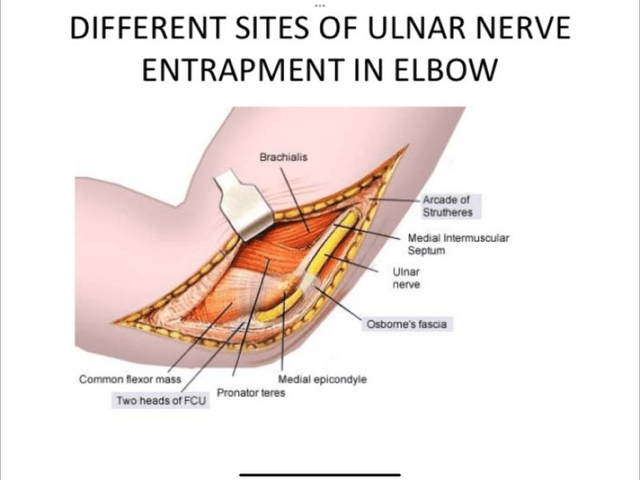
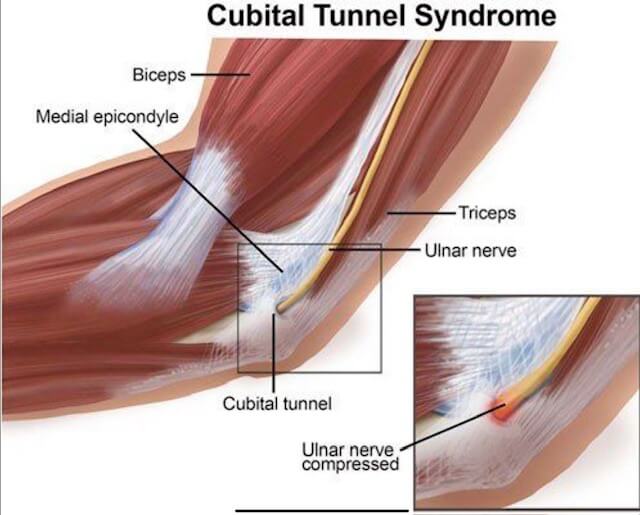
Ulnar nerve decompression is a surgical procedure used to relieve pressure on the ulnar nerve, most commonly at the elbow, where the nerve passes through a narrow space called the cubital tunnel. The ulnar nerve controls sensation in the ring and small fingers and powers several hand muscles that are important for grip and fine motor control. It is a different nerve than Carpal tunnel syndrome (that is the Median nerve) but the same concept of arthritis compressing the nerve in the arm or hand and causing symptoms.
Why It’s Done
When the ulnar nerve is compressed or irritated—often from repetitive elbow bending, prolonged leaning on the elbow, prior injury, or arthritis—patients may develop cubital tunnel syndrome. Symptoms can include:
- Numbness or tingling in the ring and small fingers
- Hand weakness or clumsiness
- Pain or aching on the inside of the elbow
- Symptoms that worsen when the elbow is bent, especially at night
If symptoms persist despite non-surgical treatments (such as activity modification, splinting, or physical therapy), surgery may be recommended. The majority of patients do NOT require surgery, but get better with non surgical measures.
What the Procedure Involves
The goal of ulnar nerve decompression is to create more space for the nerve so it can glide freely without being pinched. There are several surgical approaches, chosen based on anatomy and severity:
- Simple decompression: Tight structures over the nerve are released, relieving pressure while the nerve remains in its natural position. This is the option we choose most often.
- Ulnar nerve transposition: The nerve is moved to a new position in front of the elbow (subcutaneous, intramuscular, or submuscular) to prevent stretching during elbow bending. This is more involved and was designed to prevent a nerve that still gets pinched as it moves across the arm bone-detailed research studies do not suggest a dramatic advantage to this approach versus the simple decompression most of the time.
- Medial epicondylectomy (less common): A small portion of bone is removed to reduce nerve tension.
Recovery & Outcomes
Most procedures are done on an outpatient basis. Recovery typically includes:
- Temporary soreness and swelling around the elbow
- Gradual return of sensation and strength over weeks to months
- Physical therapy or guided exercises in some cases
Many patients experience significant improvement in numbness and pain. Recovery of muscle strength may take longer, especially if nerve compression was severe or longstanding.
The surgery typically takes about 45-60 minutes and you stay in the ASC for a few hours of observation. You will have a big fluffy dressing to protect your elbow and will be advised to keep your arm mostly straight and not bend it excessively or use it for work for about 3 weeks. Often we will have staples that are removed in 10 days. The surgery is not very painful for most and most patients are off prescription pain pills within 3-7 days. About half of patients enroll in Physical Therapy at 6 weeks to maximize recovery and strength; this is not. A requirement.
Summary
Ulnar nerve decompression is a well-established surgical treatment designed to relieve nerve pressure at the elbow, reduce symptoms, and prevent further nerve damage when conservative care is no longer effective. It is a short surgery performed in an ASC with a recovery that takes several weeks. Complications are uncommon. Most patients can get better without the surgery by performing conservative measures.